Showing posts with label Smartphones. Show all posts

Tuesday, January 29, 2013

How wireless charging can drive near-field communications growth


At CES 2013, the Wireless Power Consortium displayed dozens of devices that were designed to the Qi wireless charging standard, suggesting that 2013 may be the year wireless charging becomes a feature consumers expect to come standard in new smartphones.
Nokia and HTC already offer smartphones with Qi technology integrated directly, such as the Lumia 920 and Droid DNA. For more popular smartphones that were not developed with Qi compatibility, including Apple's iPhone 5 and Samsung's Galaxy S3, third-party manufacturers have developed smartphone cases with integrated Qi technology. The cases themselves plug into the phone's power dock and relay a charge received when the encased phone is placed on a wireless power source.
Further facilitating the rise of wireless charging is the Qi standard's compatibility. Although manufacturers can build wirelessly charging devices on their own, the standard dictates that all Qi-enabled devices are compatible with all Qi-enabled power sources. That means a wireless charging pad developed by Nokia could charge a smartphone built by HTC, and so on. Best of all, it means smartphone users will never again need to scramble for a power cord that fits into the custom-designed power dock on their phones.
But what does the impending rise of wirelessly charging smartphones have to do with the growth of near-field communications (NFC) technology?
At CES, the WPC booth also displayed several new components designed to facilitate the integration of the Qi wireless charging technology. One component on display, developed by TDK, integrated both Qi wireless technology and NFC into a single chip.
As these components become smaller, cheaper, and easier to integrate into devices, Bas Fransen, chief marketing officer at ConvenientPower, says manufacturers will ship more smartphones featuring both wireless charging and NFC.
Read more about anti-malware in Network World's Anti-malware section.

Lenovo buying RIM? Not necessarily


Lenovo on Monday played down reports that it was interested in buying Research In Motion, saying that the BlackBerry maker was one of many companies it was looking at as a potential takeover target.
Lenovo's Chief Financial Officer Wai Ming Wong was quoted by the Bloomberg news service last week saying that Lenovo was looking at " RIM and many others" as takeover targets.
On Monday, a Lenovo spokesman, in a statement, said Wong only meant to include RIM in a list of possibilities, since a journalist had specifically asked about RIM.
"We are aware that Lenovo's CFO, Wai Ming Wong was speaking broadly about M&A strategy in a recent interview," the spokesman said. "RIM was raised as a potential target by the journalist and Mr. Wong repeatedly answered in a manner consistent with all of our previous statements on M&A strategy: Lenovo is very focused on growing its business, both organically and through M&A. When inorganic ideas arise, we explore them to see if there is a strategic fit."
The possibility of Lenovo's buying RIM would make sense, given Lenovo's strong push withsmartphones in China and RIM's diminishing share of the global smartphone market, which is now at 5%. Lenovo's interest in RIM is an acknowledgement of the decline in PCs and the surge in interest in smartphones, tablets and other mobile hardware.
Lenovo announced the IdeaPhone K900 smartphone, which will be sold in April in China, at the International CES trade show earlier this month. The phone is unusual in that it runs an Atom processor from Intel, while most phones on the market run ARM-based chips.
However, some pundits also have noted that RIM would not need to be sold to Lenovo, since RIM has cash on hand and is willing to license its software.
RIM's biggest problem is a lack of popular smartphones, which it hopes to correct with theannouncement of two smartphones on Wednesday based on the new BlackBerry 10 operating system.
The phones will also be shown in TV ads during the SuperBowl on Sunday.
One analyst noted that RIM isn't likely to exit the smartphone market yet since the company has no debt, has 80 million subscribers and some profits in recent quarters.
That analyst, Jan Dawson, at research firm Ovum, wrote Monday: "RIM continues to face the twin demons of consumer-driven buying power and a chronic inability to appeal to mature market consumers. There is nothing in what we've seen so far of BB10 that it will conquer the second of those demons and the first is utterly out of RIM's control. We don't expect a speedy exit from market...The company can continue in this vein for years. But its glory days are past and it is only a matter of time before it reaches a natural end."
Matt Hamblen covers mobile and wireless, smartphones and other handhelds, and wireless networking for Computerworld. Follow Matt on Twitter at @matthamblen or subscribe to Matt's RSS feed. His email address is mhamblen@computerworld.com.
Read more about mobile/wireless in Computerworld's Mobile/Wireless Topic Center.

Motorola Solutions unveils MC45 mobile computer


Motorola Solutions believes workplaces will find value in rugged handheld mobile computers that cost several times more than consumer-focused smartphones, but last much longer.
The MC45 mobile computer from Motorola.
In that vein, the company Tuesday unveiled the MC45 mobile computer, a small but rugged handset targeted at field workers.
The device is priced from $1,345.
Sheldon Safir, director of global solutions marketing at Motorola Solutions, called the cost "aggressive pricing for full functionality" in a rugged device that can be used by small and medium-sized businesses for, among other things, sales and order tracking applications and for package pick-up and delivery activities.
"We believe that the construction of this device and the total cost of ownership over the life of the product bear out the initial investment," Safir said.
"It's built to withstand [five-foot] drops [that] some consumer devices are not built for. It has a three-year lifecycle, while consumer devices are made to last a year. This can give businesses a sense of security," he added.
The price of Apple's iPhone, a range of Android devices and other smartphones can start at $200 when subsidized by a carrier -- just a fraction of the initial cost of an MC45.
Motorola Solutions provides a range of rugged and semi-rugged handheld models for use in warehouses and other areas. Some can function over cellular radio networks as well over wireless LANs inside buildings.
A higher-end MC65 handheld sells for $2,295.
The MC45 comes with a 26 key numeric keypad, not a full alphabetical keyboard as seen on some other models.
The device has a 3.2-in. touchscreen, compared to the 4-in. touchscreen in the iPhone 5, and runs a 600 MHz ARM-based processor, and the Windows Embedded 6.5.3 professional edition operating system.
The MC45 measures 5.6-in. by 2.6-in. by 1.0 in. and it weighs 8.73 ounces.
Internal flash storage is 1 GB, but a 32 GB-capable microSD slot is included.
The touchscreen can capture signatures for package deliveries and there is a 3.2 megapixel camera for data capture which supports one and two dimension barcode capture. A one-dimensional laser scanner is also included.
Motorola Solutions also sells a variety of peripherals for businesses, including a 4-slot battery charger.
Matt Hamblen covers mobile and wireless, smartphones and other handhelds, and wireless networking for Computerworld. Follow Matt on Twitter at @matthamblen, or subscribe to Matt's RSS feed . His e-mail address is mhamblen@computerworld.com.
Read more about mobile/wireless in Computerworld's Mobile/Wireless Topic Center.

Friday, January 18, 2013

Analyst pegs 'iPhone Mini' price at between $299 and $349


Apple may be able to build a cut-rate iPhone for $144, which would let it price the device between $299 and $349, hundreds less than the unsubsidized price tag of its flagship smartphone, an analyst said today.
A lower-cost iPhone would be a major strategic shift by Apple, which has rigorously held the price line, and may signal that it believes real growth will be found only in emerging markets, said Sameer Singh, who covers the mobile industry at his Tech-Thoughts blog.
"I think the primary driver would be their position in emerging markets," said Singh in a Thursday email reply to questions.
In a Jan. 14 post, Singh assembled a rough estimate of what it might cost Apple to assemble a lower-priced iPhone. His total, including manufacturing costs, came to $144.03.
By comparison, other BOM calculations by the likes of IHS iSuppli have pegged the BOM, including manufacturing, of the lowest-priced iPhone 5 at $207, indicating a 30% reduction in Apple's cost if it did pull the trigger on a less-expensive smartphone.
Singh made numerous assumptions about the hypothetical handset -- which he, like others, tentatively dubbed "iPhone Mini" in a sop to a frequently-used Apple naming convention -- including a 3.5-in. display, 8GB of storage space, the same processor and camera as used in the successful iPad Mini, a plastic rather than metal case, and the omission of support for faster LTE, or 4G, data networks.
"This is not a BOM estimate nor my prediction of the iPhone Mini's cost structure, but a rough estimate of how far Apple could realistically bring down product costs," Singh wrote in the Monday post.
Many of his component assumptions were based on the idea that Apple would reuse parts it has worked with in the past, such as a 3.5-in Retina screen -- last used in the iPhone 4S -- and the A5 system-on-a-chip (SoC) found in the iPad Mini.
Using the rough cost estimate, Singh then ball parked suggested list prices by determining various profit margins. He assumed that Apple would not surrender its historically high margins for such a phone, just as it did not when it created and priced the 7.9-in. iPad Mini tablet.
"After the launch of the iPad Mini, we can safely say that Apple will not compromise on margins and will price its products at a premium even at the low end of the market," Singh said.
The likeliest retail prices were $299 and $349, which would deliver margins ranging from 52% to 63%, close to, but not equal to, the 68% margin Apple collects on the iPhone 5.
Analysts have argued that Apple needs a lower-priced iPhone to compete with the hard-charging Samsung, and to keep its growth in line with Wall Street's expectations by broadening the potential pool of buyers.
Carriers in most emerging markets, China being at the top of the list, are resistant to paying Apple the large subsidies for the top-of-the-line iPhone -- which comes with a suggested retail price starting at $650 -- and so a cheaper model would presumably be more likely to sell well in those locales.
Singh also outlined other problems at Apple that bother analysts, especially those on Wall Street, including recent talk of major cuts in iPhone 5 component orders and the now-established pattern where Apple sells massive numbers of a new model in the first quarter or two after introduction, but with dramatic decreases after that.
A less-expensive iPhone may explain those rumors and help Apple address its up-and-down sales pattern, which seems to have had a major impact on its stock price.
The component cuts could be due, Singh said, to Apple shifting to a more frequent release schedule where it launches a new iPhone two or more times a year. "An iPhone refresh ahead of schedule doesn't make much sense unless they move to a semi-annual release schedule," he noted. "In that case, a cheaper iPhone launch later in the year would make sense."
With a cheaper iPhone in its portfolio, Apple would have two smartphone lines -- the flagship iPhone and the less-capable iPhone Mini -- and could spread out new model launches to alleviate the boom-bust cycle.
"iPhones sales have become increasingly concentrated in the launch quarter, partly attributed to Apple's marketing prowess as well," Singh said. "The only way to really solve this is to move to a release cycle that's a little more spread out. And if Apple is planning on multiple releases, it makes sense to make a cheaper iPhone."
While Singh acknowledged he has no information to support his theories, he speculated that if Apple does decide on a less-expensive iPhone, the company would launch the device in the fall, after it refreshes the iPhone 5 with a new high-priced model labeled "iPhone 5S" or even "iPhone 6."
A cheaper iPhone would also give Apple an instantly-available fallback position if, as some have predicted, carriers eventually revolt against high subsidies. In the U.S., for instance, T-Mobile plans to start selling the iPhone this year, but will not subsidize the device. Instead, T-Mobile will tempt buyers with no-contract, unlimited data plans. If that carrier's experiment works, others will follow, analysts have said.
"If they do go ahead with a cheaper iPhone, I think they'll view it as a hedge against subsidy disruption, as opposed to responding to an immediate threat," said Singh.
Apple will hold its quarterly earnings call with Wall Street analysts next week, on Jan. 23, and while questions about its future plans, including a less-expensive iPhone may be asked, it's very unlikely that Apple will break with policy and reveal anything.
Gregg Keizer covers Microsoft, security issues, Apple, Web browsers and general technology breaking news for Computerworld. Follow Gregg on Twitter at @gkeizer, on Google+ or subscribe to Gregg's RSS feed. His email address is gkeizer@computerworld.com.

Hottest Android news and rumors for week ending Jan. 18After a CES week during which the Android world was all a-twitter over a device that wasn't even revealed at the show, the previously hyperactive Galaxy S IV rumor mill has quieted down, mostly. It's likely to only be a momentary respite, however, as the device is heavily tipped to be released at the Mobile World Congress in Barcelona next month.


After a CES week during which the Android world was all a-twitter over a device that wasn't even revealed at the show, the previously hyperactive Galaxy S IV rumor mill has quieted down, mostly. It's likely to only be a momentary respite, however, as the device is heavily tipped to be released at the Mobile World Congress in Barcelona next month.
Perhaps the biggest news on the most hotly anticipated Android device so far in 2013 is that an ostensible screenshot of mobile benchmarking results has been published by a Japanese-language blog), which points out that the 1.8GHz CPU speed matches up with Samsung's Exynos 5 Octa eight-core SoC. (More on the Octa later.)
Given the source, it's important to remember that this should be taken with many grains of salt - even the inclusion of the point about the Exynos 5 Octa could easily be read as a little too circumstantially convenient. (Like Manti Te'o confessing to Lance Armstrong on Oprah or something.)
Still, I can't deny that the pairing of Samsung's two biggest headline grabbing topics makes sense. We'll see what happens (probably) at MWC at the end of February.
*
Speaking of the Exynos 5 Octa, Qualcomm CEO Paul Jacobs is unsurprisingly not a fan, according to a report from Unwired View. Essentially, he told reporters in China yesterday, Samsung is just covering for the fact that the four high-performance Cortex-A15 cores drain a ton of power by jamming four slower but less demanding Cortex-A7s into the SoC alongside them, and attempting to reap a publicity windfall by boasting about their eight-core processor.
While Jacobs is correct in noting that all eight of the Octa's cores won't operate at the same time, I'm not sure why he's saying this means the SoC is going to suck. OK, so it's not a "true" eight-core SoC, but the idea of using the low-power cores for light work and switching to the A15s for more serious tasks still makes sense, and could well back up Samsung's claims of improved battery life and better performance. Seems like fairly ineffectual spin to me.
*
The Nexus 4 official wireless charger has appeared on the site of Norwegian store Dustin Home, providing a slick pad on which to charge the Nexus 4 that you still probably don't have. Presumably, this means that it'll become available soon in the U.S., but this is a product release story involving the phrase "Nexus 4," so who really knows?
(Hat tip: Android Central)
*
But wait! The Nexus 4's availability problems will soon be a thing of the past, according to an LG executive who spoke to Challenges.fr Wednesday. LG France director of mobile communication Cathy Robin says production of the Nexus 4 is due to increase by mid-February, which could ease the supply crunch. As of this writing, both the 8GB and 16GB models are still sold out on the Play Store.
(Hat tip: r/Android)
*
Android Police has what it says is an internal Sprint document, which asserts that the company plans to offer a $400 device credit to new family plan customers who port at least one line in from a competitor. The deal's supposedly set to roll out tomorrow, so you don't have long to wait, if you're interested.
Email Jon Gold at jgold@nww.com and follow him on Twitter at @NWWJonGold.
Read more about anti-malware in Network World's Anti-malware section.

AT&T sold record number of smartphones in fourth quarter


AT&T sold a record number of smartphones in the last three months of 2012 as consumers snapped up new products from the likes of Apple and Samsung.
The company sold 10.2 million [m] smartphones in the quarter, it said in a regulatory filing Thursday. Its previous best-ever quarter was the final three months of 2011, when it sold 9.2 million [m] smartphones.
AT&T didn't break down its sales, but the strong demand was likely due to the launch of the iPhone 5, which went on sale a couple of weeks before the quarter began, and new cell phones from competitors such as Samsung, Nokia and HTC.
AT&T was a U.S. launch carrier for Windows Phone 8, which Microsoft put on sale in October.
The results mean AT&T sold a total of 26.9 million [m] smartphones in 2012, up from 25.3 million [m] in 2011.
The company is due to report its full-year results next Thursday.
Martyn Williams covers mobile telecoms, Silicon Valley and general technology breaking news for The IDG News Service. Follow Martyn on Twitter at @martyn_williams. Martyn's e-mail address ismartyn_williams@idg.com

iPhone 6 rumor rollup for the week ending Jan. 18


The iOSphere was feasting this week on Notes to Investors, those alchemical documents that transmute the lead of iPhone 6 rumors into the gold of authoritative fact.
How else could we know the many details of iPhone cheapo that emerged in such plenitude, including multiple release dates, and sizes, not to mention the suffering of "billions" who yearn for it and yet must wait.
Also this week, fingering the home button, how iPhone 6 stacks up against another nonexistent smartphone, the specter of 2014, consumer longings, and whoa of un-wow.
You read it here second.
__________
__________
iPhone 6 and iPhone cheapo due in mid-2013
Not one but two Next iPhones will be announced around June or July 2013, according to an ever-more-widely cited "note to investors" from KGI Securities analyst Ming-Chi Kuo.
Among Kuo's "expectations" is that one of the iPhones, dubbed iPhone 5S, will "very similar to the current iPhone 5" but it will have a new processor (the A7), a fingerprint sensor, and an improved camera with a f2.0 aperture and smart LED flash.
Somewhat disappointingly, Kuo "believes that the lower-cost iPhone will in many ways simply be an iPhone 5 repackaged into a slightly thicker (8.2 mm vs. the current 7.6 mm) plastic enclosure available in six colors," according to MacRumors' Eric Slivka, one of many who repeated the Kuo expectations.
According to a handy "breakdown of specs" chart helpfully included by Slivka, Kuo's "iPhone 5S" will have a bill of materials estimate of $230-$250 (making it more expensive to build than the estimated $210-$230 for iPhone 5); but the retail price for an unlocked model would be in the same range as iPhone 5: $600-$700.
Kuo "expects" the unlocked iPhone cheapo to retail for $350-$450, and to be free -- as in "FREE!" -- with a two-year contract. That Apple would offer a brand new product for a price of $0 seems a stretch; it currently offers an 8GB iPhone 4 for $0 and two-year contract with AT&T, Sprint or Verizon, or $450 if unlocked.
Slivka assures readers (who otherwise might be inclined, cynically, to consider notes to investors, or NTIs for short, as the copy/paste results of analysts reading Apple rumor sites), that Kuo "has a very good track record in predicting Apple's product plans."
This would be the same Ming-Chi Kuo who last August released an NTI that predicted the soon-to-be-announced iPad mini had suffered delays because it would use a "thinner and lighter 'GF Ditto' touch structure," according to the same Eric Slivka who faithfully summarized Kuo's expectations. Instantly known as "GFD," this new "touch structure" was (and as far as The Rollup can tell remains) a completely unexplained and possibly nonexistent innovation. But that didn't inhibit Slivka from claiming that "Apple is said to be the first company in the world to commercialize and mass produce the technology."
iPhone 6 home button to have fingerprint sensor
AppleInsider leveraged Kuo's NTI to the max. Slivka's colleague, Neil Hughes, provided new details of Kuo's expectations regarding the fingerprint sensor for the Next iPhone.
"Apple is expected to launch a new iPhone this year with a fingerprint sensor hidden beneath the home button -- an intuitive design that could be difficult for competing Android and Windows Phone devices to copy," Hughes enthused.
Kuo and Hughes expect that the fingerprint sensor will be based on technology acquired last year when Apple bought AuthenTec, which makes a variety of silicon-based "smart sensors" with functions like fingerprint recognition but also highly accurate touch and gesture processing. According to Hughes, Kuo "believes Apple will find a way to integrate the fingerprint sensor into the home button, allowing Apple to keep its 'minimalist design.'"
Hughes continued: "In contrast, many Android and Windows Phone devices have more than one button below the display, and those buttons frequently lack the mechanical push of Apple's home button. As a result, attempts to integrate fingerprint scanning on competing devices would be less intuitive, and could frustrate users, Kuo said."
Combining the iPhone home button with a fingerprint sensor lets Apple "replace the use of usernames and passwords, allowing users to authenticate in a more efficient manner. [Kuo] also expects that the fingerprint scanner will integrate with applications such as Passbook to enhance their functionality."
For background, Hughes links to an August 2012 analysis by AppleInsider's Daniel Eran Dilger on the AuthenTec acquisition. Much of the industry coverage focused on the fingerprint sensing technology and the prospect of adding a fingerprint sensor to the iPhone, and other Apple products, to lock/unlock the devices.
But Dilger examines how the home button could use AuthenTec's technology to be transformed into a complement to the iPhone's touchscreen: using swipes of different fingers not only to unlock and activate specific apps and to trigger customized tasks, but also to launch faster screen scrolling or more precise screen touch for specific apps.
In addition, he notes that AuthenTec "also develops IP cores for accelerating cryptography and encryption/decryption, features Apple could add to its System on a Chip designs to simplify and enhance the performance of iOS devices in handling HDCP (HDMI content protection) or integrating hardware acceleration of disk encryption, VPN services, app and iOS platform authentication (thwarting jailbreaks)."
So even if Kuo is right, there may be more to the fingerprint sensor than meets the i.
iPhone 6 will be outclassed by HTC's M7 ... but not really
It's part of the iOSphere's surreal charm that it can compare two unreleased and unannounced products, complete with assertions that simultaneously sound fully authoritative and utterly baffling.
"iPhone 6 vs. HTC M7: Will HTC Follow Samsung's Footsteps in Beating Apple's Smartphone?"wonders Kristin Dian Mariano, posting at International Business Times.
This is the iOSphere convention of rhetorical question, where the answer is implicit in the question. "It seems that HTC aims to follow the path paved by Samsung overtaking Apple," she announces.
She begins by citing another recent Note To Investors, this one by Jefferies stock analyst Peter Misek, who predicts that "the iPhone 5S/6 has a new 'super HD camera/screen, a better battery, and NFC,' and 'possible updates include an IGZO screen for Retina+, 128GB storage.'"
Authoritative. Yet it becomes baffling because in IBT's comparison of the two nonexistent smartphones, nearly all of the specs and features show the non-existent iPhone 6 matching if not besting the nonexistent M7.
For example, "Screen Display - Upcoming iPhone 6 is speculated to boast 5-inch Full HD display. HTC M7 will have 4.7 inches 1080p display." So, the iPhone will have a larger screen than the M7. The term "1080p," according to Wikipedia, "usually assumes a widescreen aspect ratio of 16:9, implying a resolution of 1920 × 1080 (2.1 megapixel) often marketed as Full HD."
Or take "Internal Storage - Apple's smartphone will have 128GB storage. HTC's upcoming smartphone is speculated to come with 32GB of internal storage."
And OMG both devices will have LTE and NFC, LOL. ARGH.
iPhone 6 will ship in ... wait, 2014? That must be a mistake, right?
That's the bad news. The good news is it will be preceded in June or July 2013 by the iPhone 5S.
GottaBeMobile's Josh Smith seems sold by the latest Note To Investors by Jefferies stock analyst Misek.
This year, Apple will release only a "minor iPhone 5 upgrade," Smith posts, based on Misek's NTI. But. Next year. Who Knows.
Misek "believes Apple is planning a 4.8-inch iPhone 6," Smith reveals. And it won't have a home button. That would be bad news for KGI Securities analyst Kuo, of course, who is predicting the Next iPhone, one of them anyway, will have an improved phone button.
This prediction is "based on a prototype." To keep this in perspective, it's probably best to think of an "iPhone prototype" as sort of like "iPhone fan art turned into a 3D model."
Misek also has exspectulations (a combination of "expectations" and "speculations") that the iPhone cheapo will, in Smith's phrasing, "focus on low-cost instead of being 'cheap'" and have a "polycarbonate case with 4" non-Retina display and no LTE."
A cheaper iPhone 6 matters to "billions"
And speaking of cheaper, GottaBeMobile's Chuong Nguyen says that "a Cheaper iPhone 6 Doesn't Matter to You, But it Does to Billions."
Billions. Pining, longing, yearning for iPhone, if only it was cheaper or less expensive or lower-priced. Apple, are you listening?
"It's still unclear what the cost savings and profit margin would be for a cheaper iPhone, but with emerging markets like China, India, and Africa, the tradeoff would be greater and more lucrative market share for Apple," Nguyen assures us.
Of course, Apple Senior Vice President of Worldwide Marketing Phil Schiller recently assured us that Apple will "never blindly pursue market share." [Also see: "Will Apple introduce a lower-priced iPhone?"] 
Part of the issue in overseas markets, according to Nguyen, is that carrier subsidies may not be as generous, or even available, as in the U.S. "In China, after high national taxes, the true cost of a base model iPhone 5 may be as high as $800 or $900," Nguyen says.
But last December, when the iPhone 5 went on sale in mainland China, there were two tiers of pricing. Fortune's Philip Elmer-DeWitt, based on a report by China's Shanghai Daily, reported that "Traffic may have been light at the Apple retail outlets that were selling only unsubsidized iPhones (i.e. starting at US $846), but Apple's partners were having a field day selling the iPhone 5 under contract for as little as US $96." That's affordable by almost anyone's definition.
Part of that affordability was driven by unprecedented big trade-in discounts for older iPhone models,according to a ZDNet account.
Elmer-DeWitt continued: "In addition to the 300,000 pre-orders racked up last week by China Unicom -- up 50% from the 200,000 it took for the [iPhone] 4S last January -- the carrier sold 5,000 more before Friday noon in Shanghai alone. China Telecom, for its part, expected to sell 10,00 units in Shanghai by the end of the day Friday."
iPhone 6 will be, like, un-wow
Game over, man.
"Writer and radio producer" Eric Mack, writing in CNET's Crave gadget blog, declares "The iPhone 6 won't wow: 6 reasons why."
"Back in September [2012], after the much-awaited and meh-filled unveiling of the iPhone 5, I made a declaration that's being borne out further in this week's headlines -- the iPhone jumped the shark some time ago," Mack reminds us. "Jumping the shark" was a phrase originally coined for the point where a television series runs out of real ideas and resorts to gimmicks.
The iPhone 5 demonstrated, Mack reiterates, the "lack of any groundbreaking innovation."
He thinks there will be an "iPhone 5s" with some dinky "iterative updates" and possibly a lower-cost iPhone cheapo. "But the real question is: then what?" he asks.
Not much, apparently.
"My gut tells me the iPhone as we know it will be done at that point," Mack says. "I have a hunch there will never be an iPhone 6, because Apple will be forced to move into a significantly different form factor to keep people interested and compete with the movement toward bigger phablet-like thingies and emerging wearable electronics."
When you put it that way, it's all so obvious: the Big Ones and the Unmistakable Irreversible Trend to "wearable electronics."
We can quickly summarize Mack's six reasons why the iPhone 6, which hunchwise will never appear anyway but if it does, will fail to wow, because the same six reasons have been pretty widely cited since the iPhone 4S, at least.
Here they are:
  • "iOS is stale"
  • "Samsung and Android are rocking lately"
  • "Apple is different under Tim Cook" (here "different" means "worse" because now Apple is a company "that seems to follow the more traditional model of giving customers what they want, rather than the Jobs model of dictating to consumers what they will want.")
  • "Young people don't think Apple is cool anymore"
  • "Price does matter" because "Money talks, and during these economic times it actually screams"
  • "To wow, you need a wow factor. ... Right now I'm having a hard time imagining any iPhone 6 that will elicit that most joyous of palindromes"
Almost needless to say, Mack doesn't bother quantifying any of these "reasons" which amount to little more than opinions, or even prejudices. An operating system is not, for example, like a loaf of bread. The fact that Samsung is rocking is irrelevant to Apple's success, both in sales and more importantly profitability: all the indications are that Apple next week will announce its most successful quarter for iPhone sales ever. And "young people" probably means "Eric Mack."
Mack's main mistake is to think that wowing the impressionable iOSphere hive mind is the same thing as having a successful and profitable product.
John Cox covers wireless networking and mobile computing for Network World. Twitter: @johnwcoxnwwEmail: john_cox@nww.com
Read more about anti-malware in Network World's Anti-malware section.


Samsung Galaxy S IV: What we (might) know so far


The Samsung Galaxy S IV might be the most-hyped non-Apple smartphone yet, judging by the volume of news coverage that ensues from the smallest possible leaks. Here's our review of what we know -- or, at least, what we think we know -- about the highly anticipated Android flagship.
It's important to remember that, while the device's existence is more or less an open secret at this point, Samsung has officially confirmed nothing about the Galaxy S IV.
The Screen
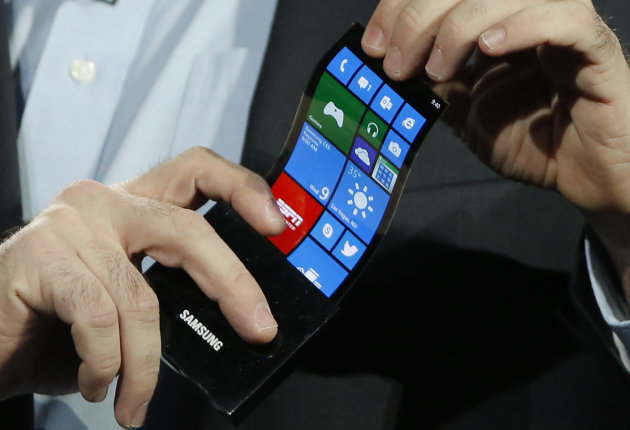
One thing that most speculation agrees on is that the Galaxy S IV, like several recent high-end Android devices, will use a roughly 5-inch screen with 1080p resolution. However, there's been fairly entertaining speculation about the nature of that screen, covering everything from the possible -- GSMArena says it may be unbreakable -- to highly risible, like the idea that it'll be a bendable display. (Sort of like if this guy made a smartphone.)
OUR TAKE: Samsung's prototype bendable displays have rarely failed to excite speculation, particularly now that there's a highly anticipated smartphone on the way as well. However, it seems far more probable that the company will opt for a traditional display with perhaps some minor wrinkle.
System-on-a-Chip
Since CES earlier this month, rumors on this topic have focused on the possibility that Samsung utilize its Exynos 5 Octa SoC -- which was introduced at the show -- in the Galaxy S IV, providing the device with two sets of four-processor cores. Four would be low-power ARM Cortex A7s for improved battery life, and the other four would be powerful but energy-sapping Cortex A15s for high performance work.
Although Qualcomm CEO Paul Jacobs recently took a public swing at the Octa -- calling it a PR stunt, and saying it's not a "true" eight-core SoC -- the alternating quad-core system could still provide concrete benefits, and it wouldn't be a surprise to see it in the Galaxy S IV.
Prolific Samsung rumor site SamMobile reports that an AnTuTu benchmark shows what could be a result for a Galaxy S IV, with its processor running at 1.8GHz - the Octa's core clock frequency.
OUR TAKE: While it certainly makes sense for Samsung to put its newest and hottest SoC in its newest and hottest phone, it seems strange that they'd make a public announcement of the Octa at one of the tech industry's signature events, but not release the Galaxy S IV. If the Octa is powering the S IV, it would unquestionably be the SoC's flagship deployment, so why not roll them out at the same time?
Still, the way companies plan out their release dates is frequently pretty opaque, so it's tough to second-guess on that basis. That, along with the AnTuTu benchmark, has us leaning in the direction of "yes" on the Octa/Galaxy S IV combination.
The Rest of the Hardware (And Software)
There haven't been many leaks on the less sexy hardware in the Galaxy S IV, but there has been plenty of speculation, most of which gives the device 2GB of RAM, 16GB of storage (and an SD card slot), a high-end 13MP main camera -- presumably complete with all of Samsung's existing camera goodies -- and a slightly less impressive front camera.
The aforementioned AnTuTu benchmark shows the ostensible Galaxy S IV running Android 4.2.1, which makes sense.
OUR TAKE: Non-SoC hardware in top-shelf Android phones these days pretty much all looks the same. Everything runs with 2GB of RAM, an 8MP to 13MP main camera, a 720p front camera and somewhere between 8GB and 32GB of internal storage. So while it would be nice to see the Galaxy S IV improve on that -- we'd love to see 4GB of RAM for better mobile gaming, for example -- it's tough to predict anything other than the same old, same old for the rest of the Galaxy S IV's internal hardware. Not that that's a bad thing.
Also, if the Android version used is anything less than Google's latest and greatest, we'll be pretty shocked.
The Release Date
The broad consensus seems to be that Samsung's going to roll out the Galaxy S IV at the Mobile World Congress in Barcelona, and you'd be hard-pressed to find rumors that have the device being released later than the first half of 2013.
Still, that general agreement has been eroding lately -- many have pointed out that Samsung probably pulls enough weight to hold its own party for the its heavily hyped new device, and dates in March, April and May have all been floated by various sources.
OUR TAKE: The idea that Samsung would want news cycles all to itself for the Galaxy S IV launch does make sense -- however, we don't think that necessarily means the company would have to throw its own event. The Galaxy S IV is going to be THE story when it comes out, regardless of setting. Our gut still tells us that MWC will be the launch point, but we'll be paying close attention to further developments.
Email Jon Gold at jgold@nww.com and follow him on Twitter at @NWWJonGold.
Read more about anti-malware in Network World's Anti-malware section.

Saturday, December 1, 2012

Hottest Android news and rumors for the week ending Nov. 30


The most disturbing thing about online shopping, to me, has always been just how easy it is. A couple of clicks, a brief glance at a credit card number, and bang -- there's an order of chicken wings on the way to your door. It's too easy, frankly, as my bank account balance and expanding waistline can attest.
Which is why Google is to be commended for making the process much more harrowing, at least in the case of the Nexus 4. If you haven't heard, the initial production run apparently sold out in about five minutes, ticking off Android fans around the world who weren't quite quick enough on the trigger.
But then! Google apparently got everything sorted out and the Nexus 4 went back on sale as of Monday -- upon which the Play store began to produce weird error messages and behave erratically, swallowing shopping carts and generally making a nuisance out of itself.
Still, at least it's all ironed out now, right? Well, mostly -- the site appears to be working normally, but you'll still have to wait awhile until you get your hands on your Nexus 4. The 16GB version will ship in four to five weeks, according to the Play store, while the 8GB version will ship in eight or nine.
*
report from the China Commercial Times has touched off widespread speculation that Google is planning to absorb Chrome OS into Android. The report states that Google is readying a sub-13-inch touchscreen Chromebook, blurring the lines between laptops and tablets.
Although there's no direct evidence of Google's plans to merge Chrome OS and Android, some have pointed out that there's plenty of circumstantial evidence to suggest that this is, in fact, the case.
*
The Galaxy S 4 rumor mill continues to swirl, though the International Business Times is calling shenanigans on the whole "leaked specs" rumor.
Given the apparent fixation of the lower-level rumor sites on the Galaxy S 4, I'm a little surprised that there's no story making the rounds about the GS 4 being an injectable nano-device that lives in your bloodstream, because pretty much everything else is out there already. Some of the rumors might be right, but mostly by accident -- the only thing that looks remotely credible is the idea that it'll come out sometime early in 2013.
*
Data, data everywhere -- the news that the iPhone 5 had quickly removed the Galaxy S III from its place atop smartphone sales charts came early this week, surprising almost no one. According to one analyst firm, the Galaxy S III was briefly the top-selling smartphone in the world -- the first to dethrone the iPhone even briefly.
~~
While the iPhone is back on top, its bigger cousin might have more reason to sweat the competition, according to ABI Research, which released a report on Monday saying that Android devices are rapidly closing in on the iPad in the tablet market.
(Hat tip: TechCrunch)
*
Facebook is apparently encouraging employees to use Android devices instead of iPhones, in what TechCrunch is calling a DroidFooding campaign. If this prompts changes for the Android app, I'm all for it.
(Hat tip: TechCrunch, again)
Email Jon Gold at jgold@nww.com and follow him on Twitter at @NWWJonGold.
Read more about software in Network World's Software section.